
From discovery to clinic

A portfolio of differentiation-based therapies targeting cancer stem cells in high-grade glioma and beyond.

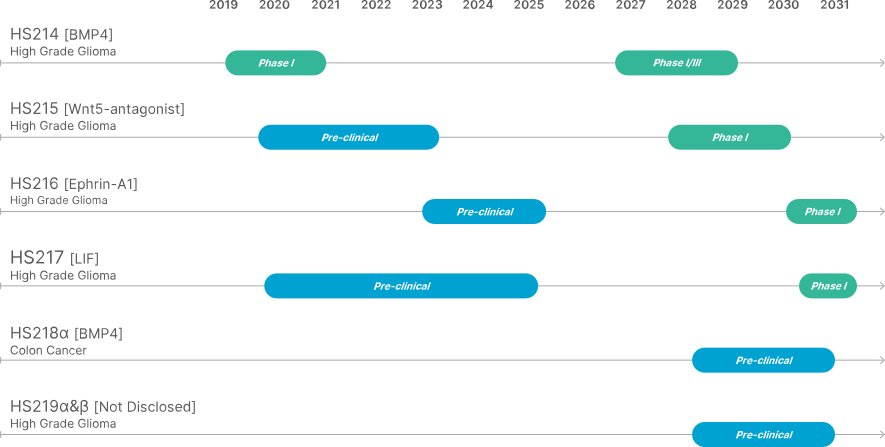
Pipeline overview

Clinical & pre-clinical programs

Drug Discovery

StemGen benefits from an extensive experience of its personnel in the field of brain stem cell biology and employs proprietary cell culture technologies and know-how for the identification and optimisation of novel glioblastoma therapeutics.

StemGen routinely establishes stable cell lines from human brain cancers, that represent a previously unavailable tool to perform high throughput, predictive drug-screening for anti-cancer molecules. This system is amenable for a highly reproducible investigation of chemical, genetic, and protein libraries on a very large scale. Using these technologies, StemGen has identified and patented a series of leading compounds that specifically target tumour-initiating cells within human tumours. Alone or in combination with traditional therapies, these can both inhibit cancer growth and also avoid tumor recurrence.
 
StemGen is in the process of applying for clinical trial investigation in the glioblastoma area and is actively expanding in this area of research, identifying new active molecules, and also studying the cellular and molecular mechanism of action of its leading compounds, to expand its portfolio of effective therapeutic products.

Lead compound

HS214 [BMP4]

hrBone Morphogenetic Protein 4

High Grade Glioma
Phase I complete
Phase II/III planned

hrBMP4 has completed phase I in recurrent GBM and the final results, recently published (Bos E. et All Molecular Cancer 2023), showed that intratumor and peri-tumor administration of hrBMP4 by Convection Ehanced Delivery (CED) was safe and well tolerated. The pattern of tumor response and overall survival revealed promising evidence of efficacy, with two patients experiencing complete and durable tumor response and another patient who showed partial response. Overall median survival was clearly extended. Planning of confirmatory studies in Recurrent and Newly Diagnosed GBM is underway. The results are available in Referza Bos et al. 2023. ClinicalTrials.gov; Identifier: NCT02869243.

Mechanism of action against GBM

hrBMP4 causes an overhauling of the cells' carcinogenic program, while activating normal pro-differentiation mechanisms that lead to increased cell maturation and, in turn, block the reproduction of tumorigenic cells, reprogramming their progeny to a non-tumorigenic fate, rather than to the production of more and new cancer stem cells. The cells will then be unable to initiate/perpetuate new tumors or to expand existing ones.

Additional products in pipeline

HS215 [Wnt5-antagonist]

Wnt5-antagonist

High Grade Glioma
Pre-clinical
HS215 is a project aimed at antagonizing Wnt5a signaling, a key driver of invasiveness and stem-like features in high-grade glioma (HGG), particularly in mesenchymal glioblastoma subtypes. Wnt5a activates non-canonical Wnt pathways through receptors such as Frizzled and ROR2, triggering intracellular cascades that regulate cytoskeletal dynamics, cell motility, and tumor cell infiltration into surrounding brain tissue.
 
The HS215 strategy focuses on inhibiting this signaling axis, thereby reducing Wnt5a-dependent activation of pro-invasive pathways. By blocking Wnt5a activity, HS215 is expected to impair glioma cell migration and limit tumor infiltration, addressing one of the main determinants of GBM aggressiveness.
HS216 [Epha-2]

Ephrin-A1

High Grade Glioma
Advanced pre-clinical
A smaller molecule almost at the same development stage as BMP4, with toxicity studies being currently pursued: preliminary data are very encouraging. StemGen can then proceed with the preparation of EPHRIN A1 or similar reagent under cGMP pharma guidelines and the application for IND.
HS217 [LIF]

LIF

High Grade Glioma — exploratory, on hold
Exploratory — on hold
Acts as a tumor suppressor on GBM cancer stem cells in culture, contrary to literature, though it does not affect CRC cells. Preliminary data show that LIF can slow GBM growth in vivo and it can act in combination with BMP4 in a synergistic fashion, and with EPHRIN in an additive way.
HS218α [BMP4]

BMP4 — Colon Cancer

Colon Cancer — exploratory, on hold
Exploratory — on hold
Blocks carcinogenic behavior in colon CSC. A new orthotopic model of colon cancer based on the HyperStem® approach, which reproduces real carcinoma in the intestine of mice and the expected pattern of metastasis development, has allowed to establish the proof that BMP4 can prevent the spreading of metastasis to other organs, in addition to reducing tumor size in situ.
HS219α&β [Not Disclosed]

Not Disclosed

High Grade Glioma
Pre-clinical
Blocks carcinogenic behavior in colon CSC. A new orthotopic model of colon cancer based on the HyperStem® approach, which reproduces real carcinoma in the intestine of mice and the expected pattern of metastasis development, has allowed to establish the proof that BMP4 can prevent the spreading of metastasis to other organs, in addition to reducing tumor size in situ.